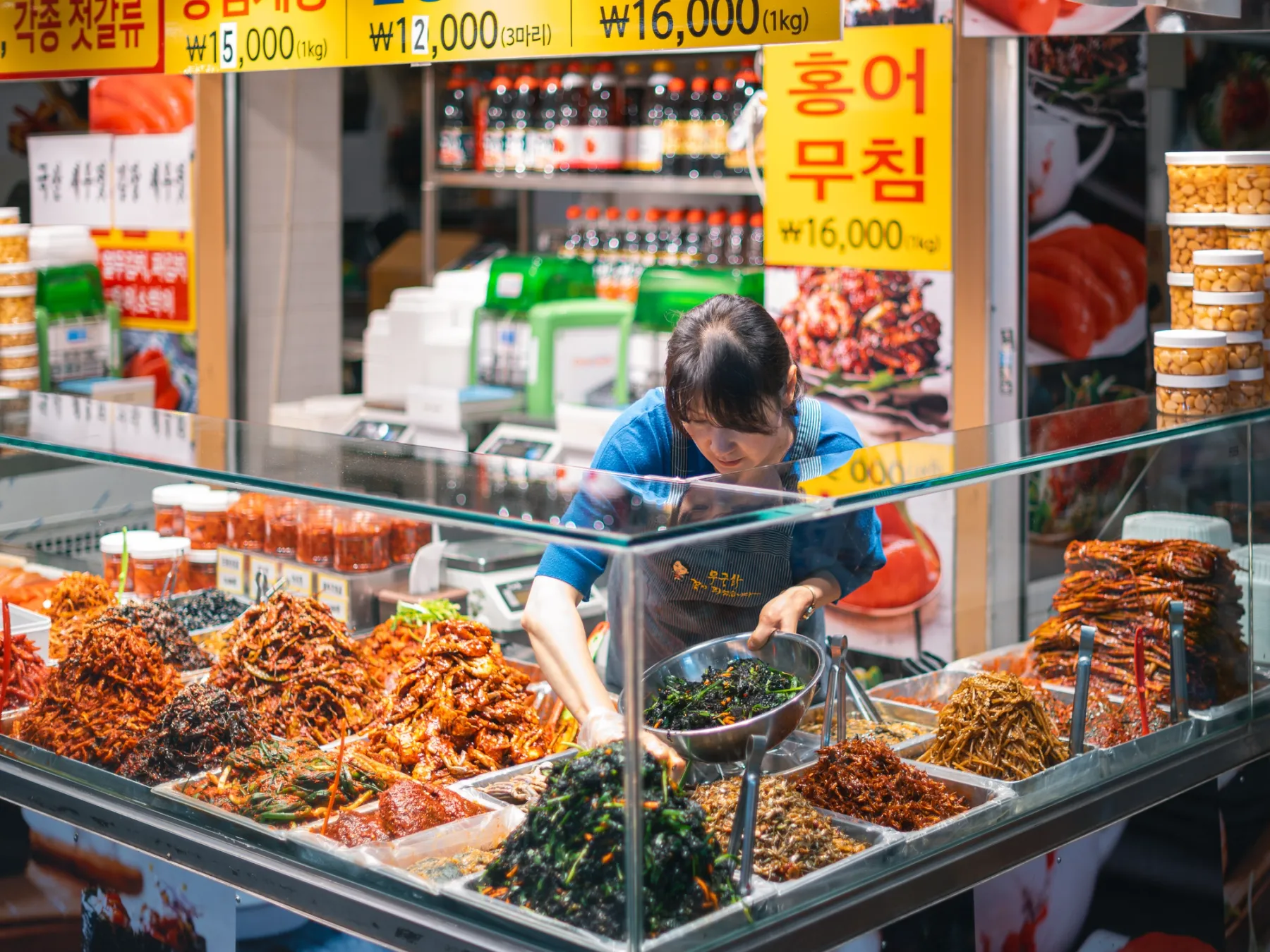
Seoul Market Tour
PRACTICAL INFORMATION
A Journet to the Market
Seoul is a city of contrasts, where centuries of tradition meet a fast-moving technological future. While much of life in South Korea now unfolds online, the streets are still where the magic happens and nowhere is that more evident than in its bustling markets.
Let me take you into the world of some of Seoul’s most vivid marketplaces. We explore Yangnyeong Market, known for its traditional Korean medicine, and Gyeongdong Market, one of the city’s largest day markets, where fresh produce changes hands from early morning onward.
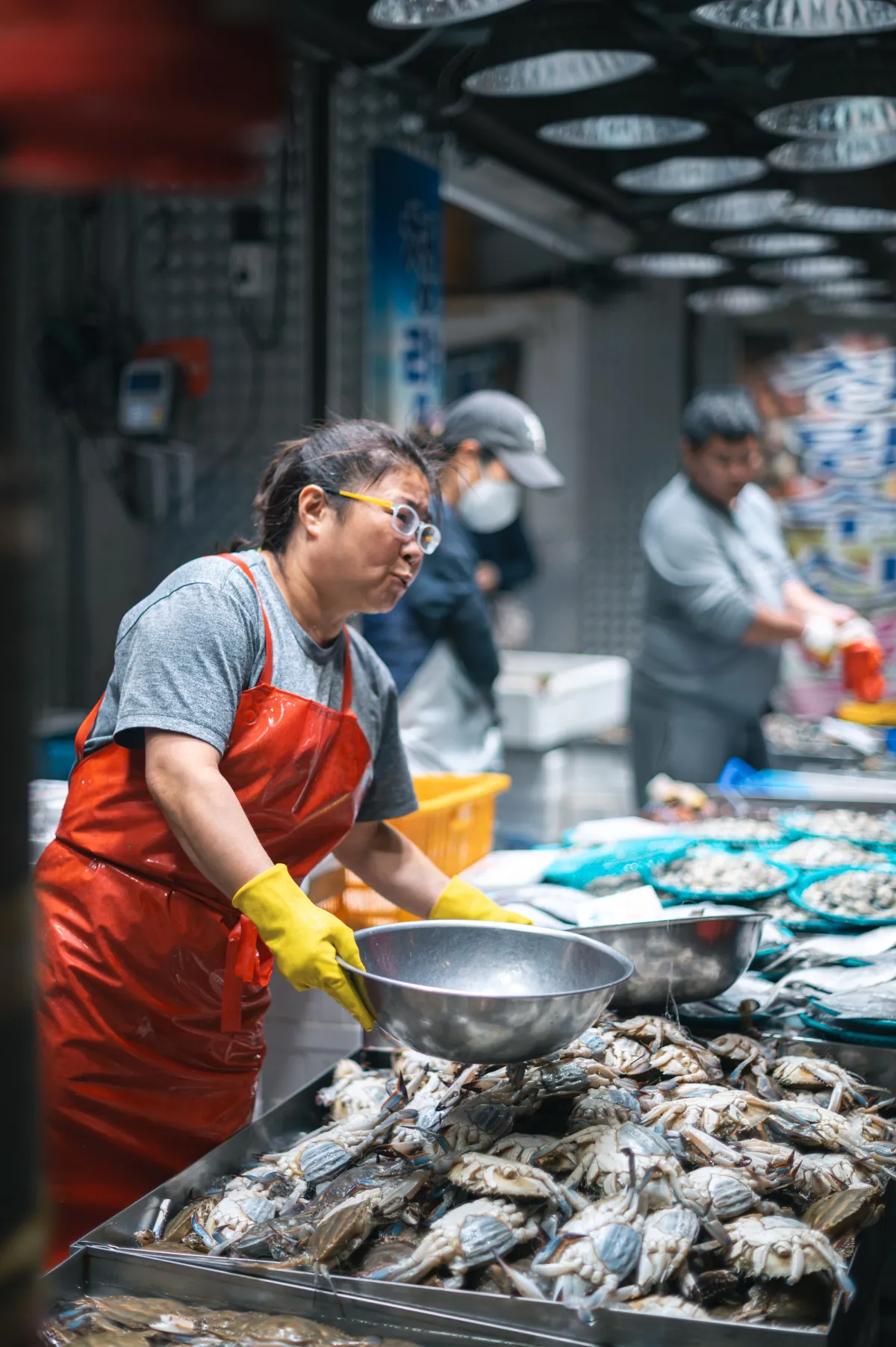
A journey among the people running their daily shopping errands, the nicely laid out market stalls, the bartering of selling and buying, and the unmistakable aromas of herbs and fruit. This isn’t just a tour; it’s an invitation to learn about the traditional Korean dining table, and to savour the essence of Seoul’s market culture.
Yangnyeong Market
Korea's largest herbal medicine market
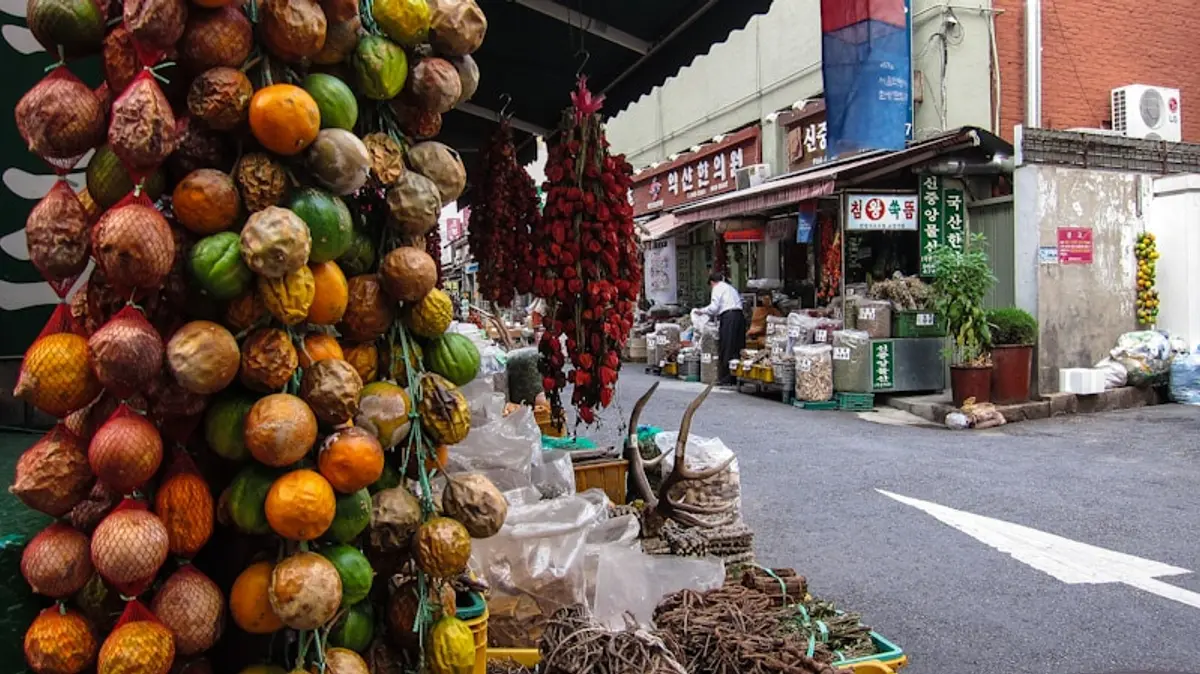
Our journey begins at Yangnyeong Market, Korea’s largest herbal medicine market. As we leave the metro station, the air carries the scents of ginseng, dried herbs, and medicinal roots. Much of the country’s traditional medicine trade still takes place here, reaching far beyond Korea’s borders. Shops and clinics line the streets, alongside a modest museum dedicated to centuries-old practices. A good place to pause for a herbal tea, or perhaps experience a treatment yourself.
Gyeongdong Market
One of Seoul's largest day markets
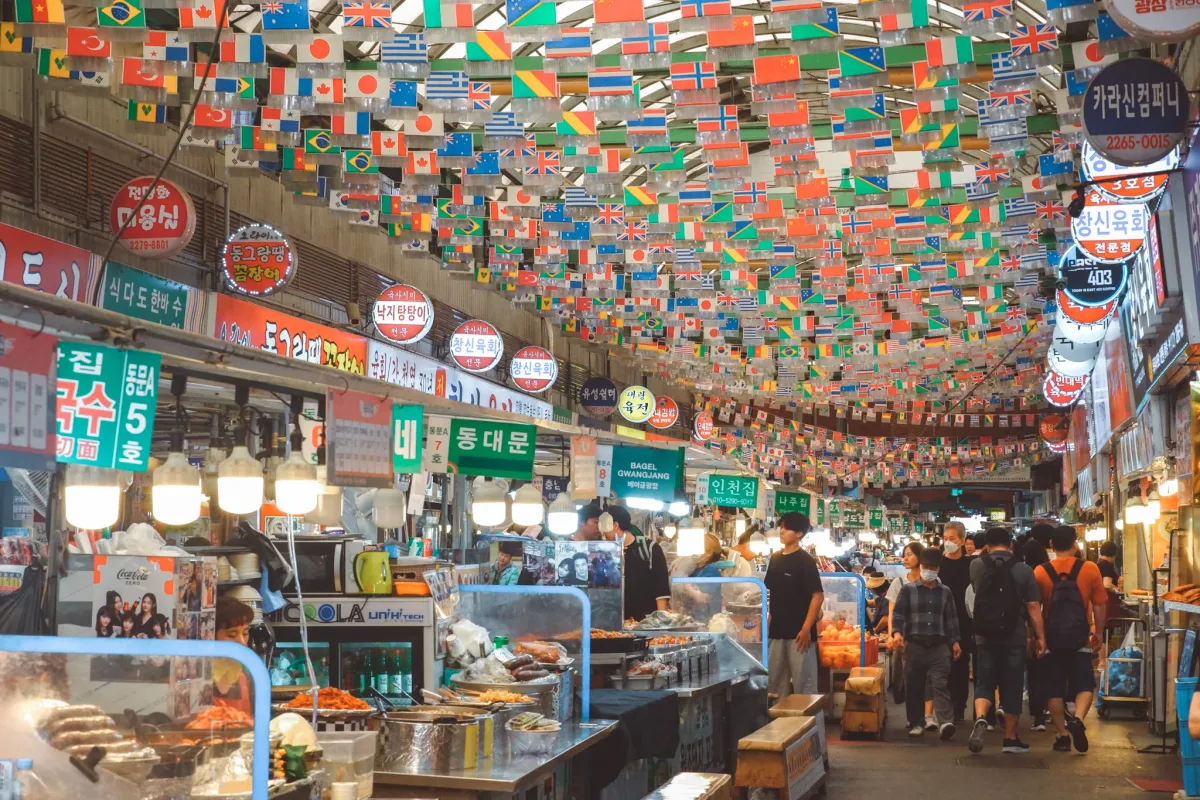
From here, we continue into Gyeongdong Market, one of Seoul’s largest and liveliest produce markets. Open from early morning, its narrow lanes form a maze of stalls selling seasonal fruits, fresh seafood, and more roots and herbs that seem to have followed us across the street. Vendors call out, shoppers negotiate, deliveries weave through the crowd. Along the way, there’s time to browse, make a small purchase, or settle into one of the modest eateries tucked inside the market.
A small suggestion
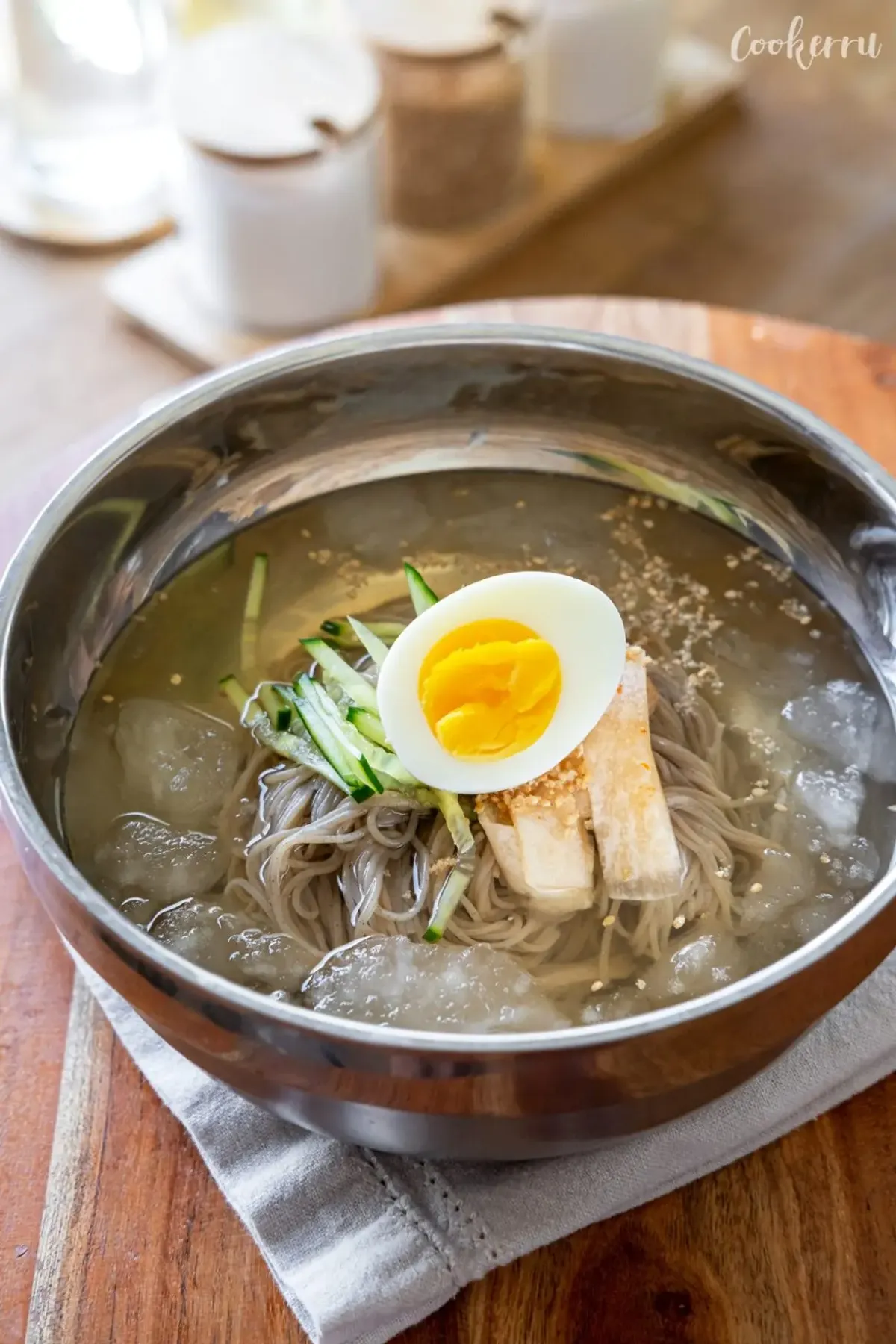
In summer, I like to end the walk with a bowl of naengmyeon — cold buckwheat noodles served in an icy broth. On cold winter days, I usually opt for hotteok — warm pancakes filled with syrup and nuts, eaten straight from a paper cup.
If you’d like to go further
If you’d like to continue, the markets can be just the beginning. We might hop on a metro and walk a stretch of the old city wall, or head to Seongsu-dong where the industrial past meets contemporary Seoul, or stay nearby and walk the streets around Cheongnyangni — a district shaped in the decades after the Korean War. The day can easily grow from there; just let me know if you’d like to explore a little further.
A personal note
The reason I created this tour is twofold. Visiting Gyeongdong Market always stirs up memories of my first holiday in Korea. It was winter, and my mother-in-law brought me to this market to help with grocery shopping for the upcoming Korean New Year. As Seoul is to many of its first time travellers, overwhelming, it was to me too. Gyeongdong Market only added to this feeling but it's one of my favourite places since. The second reason is the smells of Yangnyeong Medicine Market, which remind me of the scent of ‘drop,’ my favourite Dutch liquorice candy.